

At some point in your lifetime, you may come across legal documents including deeds, transfers of sale, mortgages, and affidavits. These documents are different from your typical agreement because they require an additional step – notarization by a licensed Notary.
Notaries are public officers commissioned by their state to serve as impartial witnesses in various legal and business transactions. Below we will go over the who, what, when, and where of Notaries and notarization.
Who can become a Notary?
The requirements for becoming a Notary, also referred to as a Notary Public or Notary Signing Agent, can vary significantly by jurisdiction, as Notary laws and regulations are established at the state or regional level.
However, there are some common criteria that individuals must generally meet to become a licensed Notary:
- Residency or Physical Presence: In many places, individuals must be a resident of the state or region where they want to become a Notary, or they must maintain a physical presence or a place of business within that jurisdiction.
- Age: Typically, individuals must be at least 18 years of age, although some jurisdictions have different age requirements.
- Legal Status: Notaries are often required to be U.S. citizens or legal permanent residents, although some areas permit non-citizens to serve as Notaries.
- No Criminal Convictions: Most states require Notary applicants to be free of felony convictions. Some jurisdictions also take into account certain misdemeanor convictions when reviewing applications. A background check may also be required.
- Education or Training: Some states may require Notary education or training, which can include courses or exams related to Notarial laws, practices, and ethics.
- Application and Fees: Individuals usually need to complete an application to be commissioned as a Notary, pay any associated fees, and apply to the appropriate state agency or commissioning authority.
- Bond or Insurance: Many jurisdictions require Notaries to obtain a surety bond or errors and omissions (E&O) insurance to cover potential liability issues. In case of Notarial errors, the bond or insurance ensures that financial compensation is available to harmed parties.
- Pass an Exam: In many states, individuals must pass a Notary exam to showcase their knowledge and understanding of Notarial procedures and laws.
- Official Equipment: After being commissioned, Notaries must obtain official equipment, including a Notary seal or Notary stamp as well as a journal to keep track of notarial acts.
- Renewal: Notary commissions are typically granted for a set term, such as four years. To continue serving as a Notary, individuals must renew their commission by following a similar application process.
Because the process of becoming a Notary is overseen by a commissioning authority or state agency, such as a Notary regulating agency or the Secretary of State, individuals must confirm the most up-to-date criteria and requirements of their respective jurisdiction or state.
What is the primary role of a Notary?
The primary role of a Notary is to verify the identity of individuals signing documents, administer oaths, and confirm the legitimacy and validity of documents that need to be notarized. Notaries play a critical role in preventing fraud and ensuring the integrity of documents.
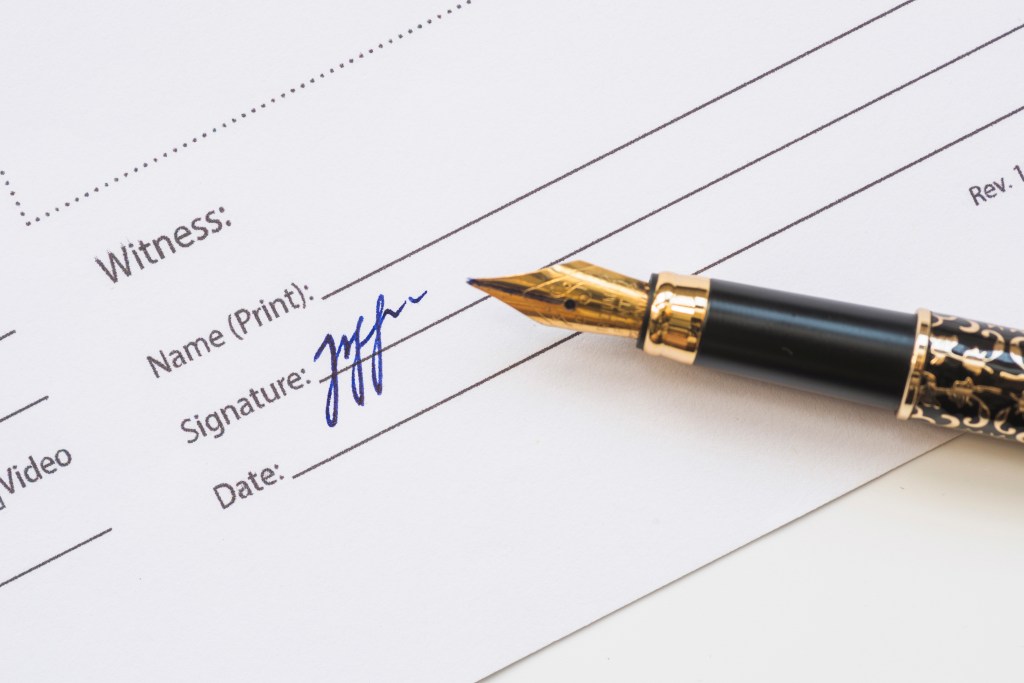
Key functions of a Notary include:
- Identity Verification: Notaries must confirm the identity of individuals signing documents, which is typically done by examining government-issued identification.
- Witnessing Signatures: Notaries witness the signing of important documents, ensuring that signatures are legitimate and that the people signing understand the content of the documents.
- Administering Oaths and Affirmations: Notary services can include administering oaths or affirmations, which are solemn promises to tell the truth or fulfill certain obligations. This is most often required in legal proceedings and affidavits.
- Coercion Prevention: Notaries are responsible for confirming that the individuals signing are doing so willingly and are not being coerced or pressured.
- Preventing Fraud and Forgeries: Notaries function as a deterrent to fraud and forgery. By verifying identities and witnessing signatures, Notaries add a layer of security to the documents they notarize.
- Maintaining Records: Notaries maintain a record of the notarial acts they perform, which is important for future reference and verification.
What does notarization mean?
Notarization is the process of having a Notary confirm the authenticity and legality of a document or a signature on a document. Documents are officially notarized when an agent adds their signature and Notary stamp or Notary seal to the document.
What is the time limit to get a document signed?
Typically, there is no specific time limit for getting a document notarized. However, it’s important to plan ahead, communicate with the scheduled Notary, and meet any deadlines associated with the document in question. The Notary will notarize each required document at the scheduled time and place.
What is a Remote Online Notary (RON)?
A Remote Online Notary, typically abbreviated as RON, is a Notary Public who is authorized to perform notarial acts for individuals through online or remote methods, usually through secure video conferencing technology. RONs provide people with an opportunity to have their documents notarized without the need for physical presence, making the notarization process more accessible and convenient.
RONs can notarize a wide variety of documents, including real estate transactions, legal contracts, financial documents, and more.
Remote online notarization provides convenience and efficiency, especially in situations where individuals are unable to meet with a traditional Notary in person.

What states permit RONs?
The use of RON services is regulated by state laws. Not all jurisdictions allow for remote online notarization. Below are the states and jurisdictions that have yet to pass legislation fully authorizing Remote Online Notarizations in the year 2023. We recommend confirming with your state and jurisdiction.
- Connecticut
- California (until the year 2030)
- Delaware
- District Of Columbia
- Georgia
What is the difference between a Notary Public and a Loan Signing Agent (LSA)?
Loan Signing Agents are licensed Notaries. However, while general Notaries stamp and sign a variety of documents and paperwork, Loan Signing Agents are certified and trained specifically in the field of loan documents. Because the financial services and mortgage industries typically involve more sensitive and complicated transactions, they rely on the knowledge and expertise of Loan Signing Agents.
Neither Loan Signing Agents nor Notaries may provide legal advice, interpretations of documents, or clarification of terms. The primary purpose of Loan Signing Agents is to assist with document handling and processing at the final stages of a loan. Their role is critical in the mortgage closing process, and they serve as an impartial and knowledgeable intermediary between borrowers and lenders or title companies.
What is In-Person Electronic Notarization (IPEN)?
In-Person Electronic Notarization (IPEN) is a method of notarization that combines traditional in-person notarization with electronic technology. IPEN is essentially the same as traditional paper-based notarization with one primary difference: the documents to be notarized are electronic. To complete an IPEN, the Notary and individual signing physically meet together, review the documents on a mobile device or computer, and utilize electronic signatures instead of traditional ink signatures.

Key features of IPEN:
- Physical Presence: The Notary and individual signing must be physically present in the same location at the time of the notarization. This is the opposite of RON, where the Notary and individual signing meet utilizing video conference.
- Electronic Documents: Documents to be notarized as well as the signatures are electronic, typically using an e-signature device or tool.
- Identity Verification: Just as a conventional notarization, the Notary verifies the individual signing’s identity using traditional methods, such as inspecting government-issued identification.
- Notarial Act: The Notary notarizes the electronic documents by attaching an electronic signature and Notary seal to complete the notarization.
- Document Security: IPEN usually includes strict measures to ensure the integrity and security of electronic documents, such as digital certificates and encryption.
- Recording and Documentation: Similar to traditional notarization, IPEN Notaries document their notarial acts and maintain a record, which may be electronic.
IPEN provides a good balance between the assurance of traditional notarization and the convenience of electronic documents.
When is a Notary required?
A Notary is required in situations where the legality and authenticity of documents as well as the identities of the signers must be verified. Notarization serves as a security measure to prevent fraudulent activity and to safeguard the integrity of documents. Common situations where a Notary may be required include:
- Real Estate Transactions: Notaries are often involved in the sale and purchase of real estate, most commonly to ensure that property deeds and related documents are executed correctly and are legally binding.
- Estate Planning: Notarization is typically required to make wills, trusts, and power of attorney documents valid.
- Legal Documents: Various legal documents, including contracts, affidavits, and court pleadings may require notarization to be admissible in court.
- Financial Transactions: Certain financial transactions, like mortgage agreements, loans, and promissory notes, may require notarization to provide an extra level of enforceability and security.
- Powers of Attorney: Notaries may be involved in the creation and execution of powers of attorney, granting an individual the legal authority to act on someone else’s behalf.
- Business Transactions: Business agreements, contracts, and corporate documents may need notarization to be legally enforceable.
- Government Documents: Many government forms and applications, including immigration-related documents and certificates as well as marriage licenses and divorce decrees, may require notarization.
- Affidavits and Sworn Statements: Notaries can verify the truthfulness of statements and administer oaths when individuals need to make affidavits or statements.
- Medical Directives: Specific types of healthcare documents, such as healthcare proxies and living wills, may require notarization to confirm their validity.
- Vehicle and Boat Titles: The transfer of vehicle or boat titles often involves notarization to prove ownership.
International Documents: Documents intended for use in foreign countries may require notarization and, in some cases, additional authentication, such as Apostilles. Many Notaries listed with Guard Grabber offer Apostille services.

When does a notarization expire?
In general, notarizations do not have an expiration date. Once a document has been properly notarized, it remains valid unless the document itself has an expiration date or is revoked by the issuing authority.
There are some important considerations:
- Document Specifications: Some documents may have an expiration date or particular requirements related to notarization. As an example, a power of attorney document may specify how long it remains valid.
- State Laws: Some states may have specific timelines or requirements for certain types of notarized documents.
Document Revocation: In some cases, documents can be invalidated or revoked by the issuing authority or the parties involved. Notarization does not make a document exempt from changes or revocation.
Where are documents notarized?
Documents can be notarized in a variety of places depending on the nature of the document and the needs of the parties involved. Many Notaries will have an office or a fixed location where documents are notarized.
However, a mobile Notary, often referred to as a traveling Notary, is a Notary Public who provides Notary services at a location chosen by the client rather than in a traditional office or fixed location. Mobile Notaries and traveling Notaries are mobile in the sense that they travel to the client’s location, such as a home, office, hospital, or another mutually agreed-upon venue, to perform notarial acts. Mobile Notaries offer convenience and flexibility, as clients can schedule appointments at times and places that are most convenient for them. This service is particularly useful in situations where the client cannot easily visit a traditional Notary’s office.
Where can I find a Notary near me?
If you’re looking for a reliable and licensed Notary Public, including Loan Signing Agents, in your area, Guard Grabber is here to help! You can easily search for Notaries based on zip code and miles away from your location. Browse the profiles of local Notary Publics and quickly compare offered services, pricing, availability, proximity, response time, and client feedback to find the perfect fit. Start your search here.
Photo Sources:
- https://www.freepik.com/free-photo/consulting-with-lawyer_5766393.htm#page=2&query=notary&position=1&from_view=keyword&track=sph – Image by pressfoto
- https://www.freepik.com/free-photo/witness-signature-paper_3442403.htm#query=notary&position=3&from_view=search&track=sph
- https://www.freepik.com/free-photo/businesswoman-having-video-conference-with-colleagues-during-coronavirus-quarantine_20122958.htm#page=2&query=remote%20online%20notary&position=11&from_view=search&track=ais – Image by rawpixel.com
- https://www.freepik.com/free-photo/serious-coworkers-discussing-project-using-laptop-together_6628905.htm#query=two%20people%20looking%20at%20computer&position=45&from_view=search&track=ais – Image by pch.vector
- https://www.freepik.com/free-photo/person-using-wax-seal-blurred-certificate_11329372.htm#query=stamping%20document&position=8&from_view=search&track=ais
Follow us on:
Subscribe to our blogs:
 Guard Grabber
Leave a comment